A newsletter bringing together research and action for inclusive online course design.
If you’ve been reading our Digest for some time, you’ll know it began as the Design Matters Digest, then branched into the Accessibility Matters Digest. We’re back in 2026 with a mini-series on Building Universal Design in Canvas. Think of this mini-series as the collision of both Digests, an Accessibility x Design collaboration, aimed, as always, to bring research and action together for more effective, inclusive course design.
Does your Canvas course design empower various ways to engage?
Welcome to the first of three special editions of Design Matters Digest, a monthly newsletter that explores elements of online course design and the research that can help you improve your Canvas courses. Over the next three months, the Digest will focus on building universal design principles into Canvas course design. This month, we’re looking at the role design plays in motivating learner engagement and empowering various ways to engage.
“Student engagement increases student satisfaction, enhances student motivation to learn, reduces the sense of isolation, and improves student performance in online courses” (Martin & Bolliger, 2018).
Research has demonstrated that learner engagement is connected to a range of key outcomes, from student achievement to retention and beyond. Yet we also know learners vary in their abilities and preferences for accessing content and in what motivates them to engage with learning concepts. Here, universal design frameworks aim to guide designers and educators to meet that variability head-on. These principles suggest that providing multiple means for students to engage with content acknowledges and leverages that variability for greater success (CAST, 2024).
From connecting content to students’ lives to incorporating multimedia learning options, there’s no shortage of great ideas for driving engagement with universal design principles. Yet taking those ideas and translating them into Canvas content design can prove quite challenging: how can courses offer choice without resulting in an endless scroll or create reflection opportunities that students won’t overlook?
No need to be stuck in a design dilemma! Thoughtful course design can bring key universal design principles to life in Canvas without the usual trade-offs. Let’s explore a few tips for how to build multiple means for engagement into Canvas and some tools that make it easy and accessible:
Use visual and dynamic content structures to empower choice and agency.
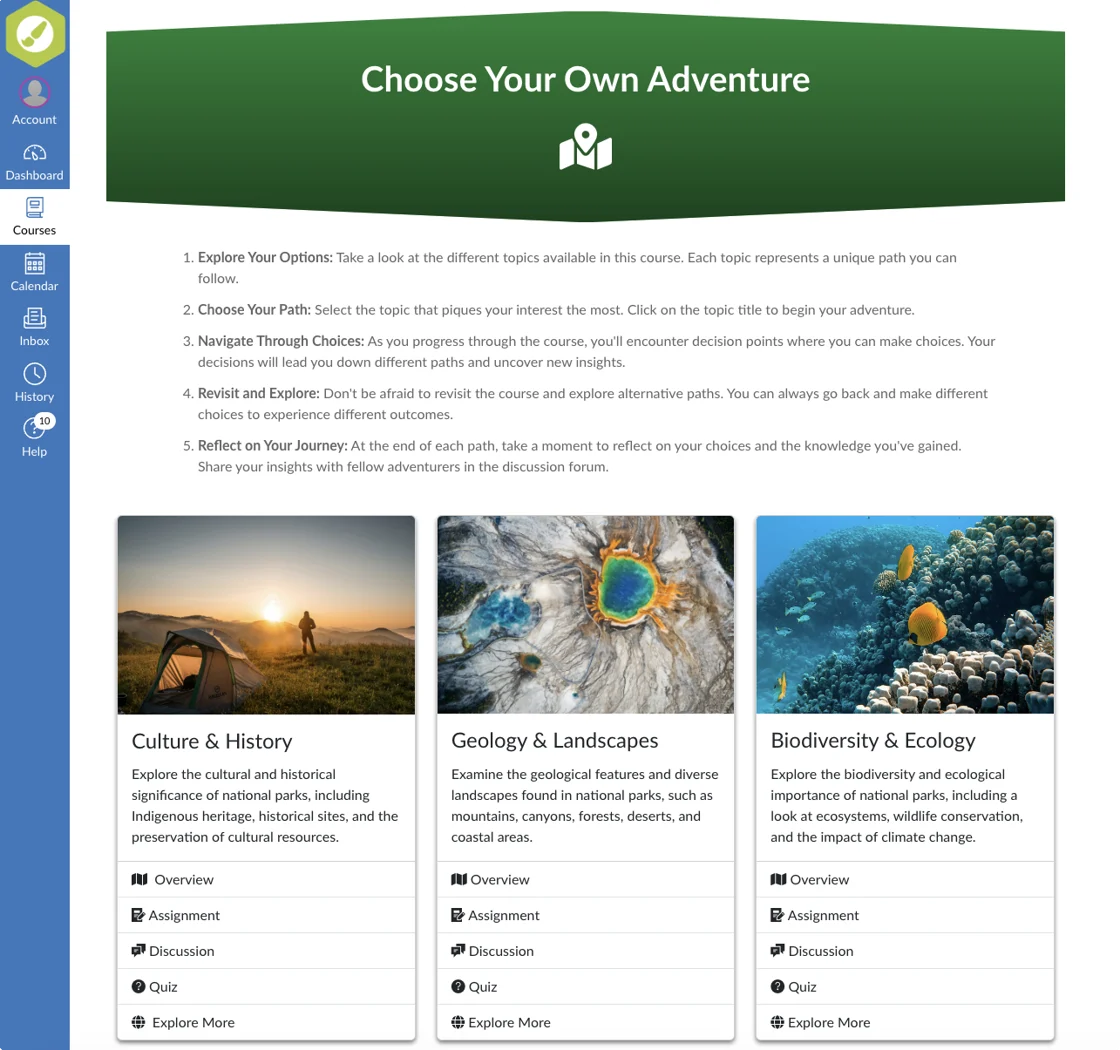
Most Canvas page designs stack content top-to-bottom, resulting in a single, linear learning flow. To empower more agency in students’ engagement processes, designers can use column structure to display learning choices at equal weight or to align images, videos, and podcasts with text content. What’s more: using interactive structures such as tabs or accordions allows learners to select content to digest in a manner that supports their individual processing needs.
It’s easy to create visually appealing and functional choice experiences for learners in Canvas using DesignPLUS and its Columns, Cards, Accordions, and Tabs tools–no coding required. You can even apply pre-designed content blocks for choice and find new templates in the DesignPLUS Library!
Leverage interactivity for tailored support and feedback.
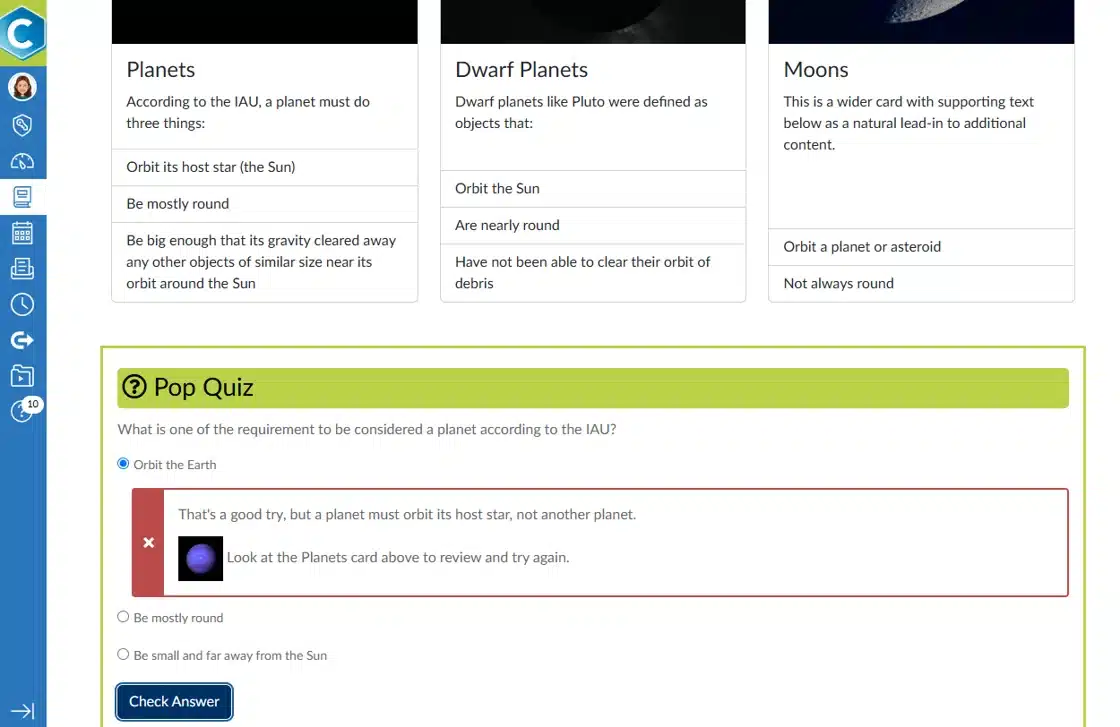
Access is key to engagement, but how can designers support all learners with an assortment of resources (CAST, 2024) without causing cognitive overload (Castro-Alonso et al., 2021; Sweller et al., 2019)? Using various select-to-reveal designs–such as tooltips, dialog boxes, accordions, and tabs–allow for embedded support right where it’s needed without cluttering the content. Plus, utilizing interactive, no-stakes quizzes gives learners a chance to monitor their understanding, and automatic feedback can connect them with tailored support or extension options.
Create and embed interactive elements the easy way: right inside the familiar Canvas editor! DesignPLUS features dozens of interactive (and accessible!) tools, from popup Dialog Boxes to ungraded Quick Check quizzes that enhance student engagement and support inclusive access.
Employ visual weight and interactivity to promote metacognitive moments.
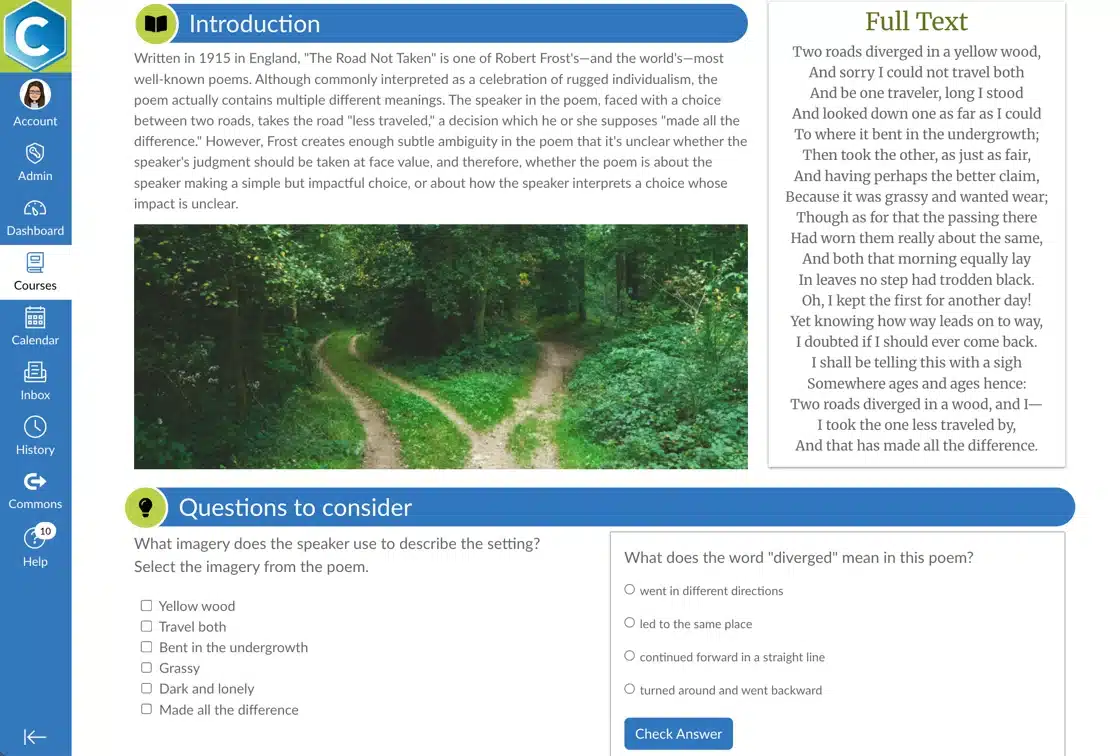
Helping learners set personal goals, maintain motivation to engage, and reflect on learning progress are key to universal design principles (CAST, 2024). Yet lesson objectives, time-management tips, or reflection questions can be easily overlooked in Canvas, with students seeking to hit “Next” as quickly as possible. Try adding consistent visual styling to these metacognitive moments–such as icons and borders–to emphasize the content and support a rhythm of self-monitoring. Take it a step further with interactive elements: selectable checklists, short response writing, or self-assessment quizzes encourage a purposeful pause.
DesignPLUS features ready-to-use interactive design elements that support learner reflection right within the learning content, including text input, checkboxes, and more. And with DesignPLUS, you can create reusable content styles to emphasize metacognitive learning moments throughout your courses.
Companion Webinar - Join Us!
We’ll bring these tips to life and do a deeper dive into the research on January 27th at 11am MT in our upcoming Building Universal Design in Canvas: Inclusive Engagement webinar.
Martin, F., & Bolliger, D. U. (2018). Engagement matters: Student perceptions on the importance of engagement strategies in the online learning environment. Online learning, 22(1), 205-222.
Sweller, John & Van Merrienboer, Jeroen J. G. & Paas, Fred. (1998). Cognitive Architecture and Instructional Design. Educational Psychology Review. 10. 251-. 10.1023/a:1022193728205.