By Kenneth Larsen, Chief Instructional Designer & Co-Founder, Cidi Labs
March 10. 2026
This year marks 10 years of Cidi Labs.
Even typing that feels surreal.
I’m incredibly grateful — and honestly a little emotional — thinking about the educators and institutions who have trusted us over the years. We would not exist without you.
When I chose to become an instructional designer, it wasn’t because I wanted to build software — in fact, I was hoping to get away from it. It was because I love teaching and technology, and I wanted to help educators who care deeply about their subjects find better ways to share that knowledge and passion with their students.
I just wanted to help.
“When I chose to become an instructional designer, it wasn’t because I wanted to build software…It was because I love teaching and technology, and I wanted to help educators…find better ways to share their knowledge with students.”
My story with Cidi Labs began at Utah State University’s (USU) Center for Innovative Design and Instruction (CIDI).
My job was to help build online courses. I was surrounded by incredibly thoughtful instructional designers who cared deeply about teaching and learning. I had a front-row seat to conversations with faculty — their goals, their frustrations, their creativity.
I watched.
I listened.
I asked questions.
And patterns started to emerge.
Building effective, engaging, accessible courses in Canvas was possible — but it wasn’t easy. The same friction kept surfacing:
Because I had a background in web design, I started wondering: Could I reduce some of this friction? Could I make it easier for designers and faculty to focus on learning instead of wrestling with tools?
Fortunately, my boss was generous (and crazy) enough to let me experiment in our Canvas instance.
I started building small utilities using the Canvas API, LTI tools, and custom CSS and JavaScript. Nothing fancy. Just practical tools to make our own jobs easier.
There was no business plan. No startup dream. No five-year roadmap.
It was just me trying to help the people sitting next to me focus on the parts of their jobs that they loved.
As we used the tools with faculty, something unexpected happened.
They got excited.
They asked if they could use them too. Then they told other faculty. Then other institutions started asking about them.
Wanting to share what we’d built, USU released some of the tools as open source. That felt aligned with our mission — just put it out there and let people benefit.
But open source brought new challenges:
At one point, we even offered to give the code to Instructure so it could just become part of Canvas and everyone could have access.
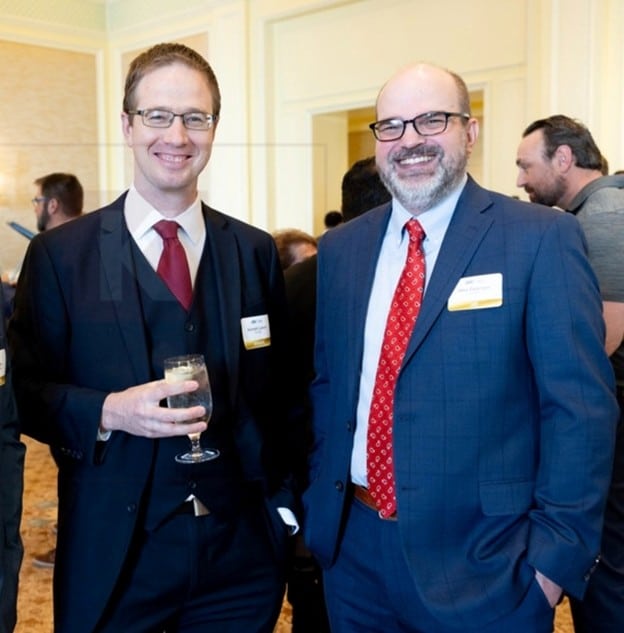
Instead, in 2016, Utah State created Cidi Labs as a separate organization so these tools could be sustainably supported and shared more broadly.
And just like that, something that started as internal experiments became a company.
But the heart of it never changed.
Everything we built came from lived experience — from real meetings with faculty, real bottlenecks, real accessibility struggles. Not market research. Not trend reports. Just proximity to the work.
Cidi Labs was born inside a university. That perspective still shapes every decision we make.
“Everything we built came from lived experience — from real meetings with faculty, real bottlenecks, and real accessibility struggles.”

If I look back over the last decade, what stands out most isn’t product milestones (although some of those were a lot of fun to build). It’s relationships.
Our customers don’t just use our tools. They shape them.
So many of our best features exist because someone said, “I wish there were a way to…” and trusted us enough to explain the friction they were feeling.
We’ve tried to stay grounded in the same habits that started this whole thing:
Watch.
Listen.
Ask questions.
Feedback has shaped everything — UX decisions, accessibility improvements, scalability changes, administrative tools.
We’ve been fortunate to work with institutions that see us as partners rather than vendors. That changes how you build. It reminds you that the work matters.
Ten years inside real institutions teaches you humility.
It teaches you that what you do — and how you do it — really matters.
I love running into customers at conferences and hearing their excitement about something we released. Even more, I love seeing creative uses of our tools that I never imagined when I first wrote the code.
It teaches you that design matters — not just visually, but emotionally. How a student feels navigating a course matters. How a faculty member feels building one matters.
It teaches you that accessibility matters. It isn’t a checklist. It’s a responsibility. Real people are impacted by whether we get it right.
“Design matters — not just visually, but emotionally. How a student feels navigating a course matters. How a faculty member feels building one matters.”
And it teaches you that the difference between a tool that demos well and one that survives institutional scale often comes down to small, thoughtful refinements — and strong support.
A decade of real-world use strips away ego. It forces you to focus on what actually works.
Any impact Cidi Labs has had belongs to educators. I love to see the amazing experiences these educators create for their students.
Because of their trust and collaboration, institutions have been able to:
We didn’t create those outcomes alone. Educators did. We just built tools to support their work.
What Hasn’t Changed
Even as we’ve grown, the fundamentals haven’t shifted.
We’re still educator-first.
We’re still Canvas-focused.
We still believe affordability matters.
We still believe tools should empower — not complicate.
And we still respect the realities institutions operate within: limited time, limited budgets, evolving standards, and increasing expectations.
If anything, growth has reinforced how important it is to stay close to the people we serve.
Distance is dangerous. Listening keeps you aligned.

The work isn’t finished. It never will be.
Accessibility standards will continue to evolve. Expectations for course quality will continue to rise. Online and hybrid learning will keep expanding.
The challenges will change — but they won’t disappear.
Our commitment is simple: keep evolving alongside educators. Keep collaborating with the Canvas community. Keep refining. Keep listening before building.
That mindset started this journey.
It’s what sustains it.
Gratitude
If you know me, you know I tear up easily. Writing this has definitely brought fond memories and some tears.
To the instructional designers who trusted early experiments.
To the faculty who embraced better workflows.
To the administrators who championed accessibility initiatives.
To the institutions that took a chance on tools built and supported by a small but mighty team.
To all of you who share our vision and passion.
Thank you.
The trust you’ve placed in Cidi Labs means more to me than any milestone ever could.
Ten years in, I still feel the same responsibility I felt sitting inside CIDI at Utah State:
Watch.
Listen.
Ask questions.
Then build something that makes a difference.

Kenneth is the genius behind DesignPLUS (formerly known as Kennethware), which he invented when he worked as a programmer/analyst with Utah State University’s (USU) Center for Innovative Design and Instruction (CIDI).
Kenneth blends a master’s degree in Instructional Technology and Learning Sciences from USU with 14 years of Internet development experience to empower teachers and designers to push the boundaries of online course development.
Description